Vape Mods & Accessories
Welcome to the world of vape mods and accessories — the heart of any serious vaping setup. If you have ever felt overwhelmed by terms like wattage, sub-ohm, regulated mods or RDA, you are not alone. This page is designed as your complete starting point: a clear, friendly and honest introduction to everything that surrounds advanced vaping devices. Our goal is simple — to help you understand how these devices work, what each accessory does, and how to build a setup that truly fits your needs, without pressure and without jargon.
What Are Vape Mods? A Simple Definition
A vape mod is the central unit of a vaping device: it houses the battery, the chipset and the controls that transform your e-liquid into vapor. The word « mod » comes from the early days of vaping, when enthusiasts literally modified flashlights and other hardware to build more powerful devices. Today, mods are precision-engineered products, far removed from those improvised beginnings.
Think of a mod as the engine and dashboard of a car: it provides the power, but also the information and safety systems that make the experience predictable. A good analogy is a kitchen stove — an old cigarette is like a single-burner camping stove, while a modern mod is an induction cooktop with temperature control, timers and safety cut-offs.
Pod Systems vs Mods: Where Do Mods Fit?
Many beginners start with small pod systems, which are compact, automatic and very easy to use. Mods sit one step above: they offer replaceable batteries, adjustable power, and far more customization. If a pod system is like an automatic-transmission car, a mod is a manual with a full dashboard — more control, but also more to learn. That learning curve is exactly what this page is here to soften.
The Main Types of Vape Mods
Not all mods are built the same. Understanding the main families of devices is the first step toward choosing well.
- Regulated box mods: The most common type today. They include a chipset that regulates power output and protects against short circuits, over-discharge and overheating. Ideal for beginners moving to advanced devices.
- Mechanical mods: Simplified tube devices with no electronics, where the battery connects directly to the atomizer. Powerful and elegant, but reserved for experienced users who fully understand battery safety and Ohm’s law.
- Squonk mods: Mods with an integrated squeeze bottle that feeds e-liquid directly to a bottom-feeding atomizer — a favorite among flavor chasers who want to refill without carrying bottles.
- Dual-battery and single-battery mods: Dual-battery models offer longer runtime and higher maximum power, while single-battery versions are lighter and more pocket-friendly.
Regulated vs Mechanical: Which One Should You Choose?
For the vast majority of vapers — especially beginners and intermediate users — a regulated mod is the clear recommendation. Its built-in protections act like airbags: if you install a coil with too low a resistance, the device simply refuses to fire instead of becoming dangerous. Mechanical mods, by contrast, give you exactly what the battery provides, with no safety net. They are a rewarding passion for hobbyists, but not a sensible first step.
Understanding Mods: Wattage, Voltage and Temperature Control
Modern mods allow you to adjust how much power reaches your coil, and this is where vaping becomes genuinely customizable.
- Wattage mode (variable wattage): You set a power level, typically between 5 and 80+ watts, and the mod delivers it consistently. Higher wattage produces more vapor and warmer vapor; lower wattage emphasizes battery life and subtler flavor.
- Voltage mode: A similar idea expressed differently — you set the voltage, and the wattage follows based on your coil’s resistance.
- Temperature control (TC): Paired with compatible coils (stainless steel, nickel or titanium), the mod monitors and limits the coil’s temperature, preventing dry hits. It works like a thermostat for your vapor.
A practical example: a vaper using a 0.15-ohm mesh coil will often find their sweet spot between 60 and 75 watts, while someone on a 0.6-ohm coil may prefer 18 to 25 watts. There is no universal « best » setting — the right number is the one that gives you satisfying flavor without burnt or harsh notes.
The Essential Vape Accessories Explained
A mod alone does nothing. It needs a family of accessories to function, and each one plays a specific role. Here is a breakdown of the components you will encounter.
Tanks and Atomizers: Where Vapor Is Born
The atomizer is the part that holds the coil and the e-liquid. The main options are:
- Sub-ohm tanks: Prebuilt coil systems with excellent vapor production and simple maintenance — the most practical choice for most users.
- Rebuildable atomizers (RTA, RDA, RBA): Devices where you install and « wick » your own coil wire and cotton. They offer superior flavor and lower long-term cost, but require hands-on learning.
- Mouth-to-lung (MTL) tanks: Tighter draw, higher resistance, designed to mimic the sensation of a traditional cigarette.
Coils: The Consumable Heart of Your Device
The coil is a small heating element wrapped in cotton. It is a consumable: depending on your usage and e-liquid, it typically lasts one to three weeks. Signs that a coil needs replacing include a muted flavor, a slightly burnt taste, or gurgling sounds. Keeping spare coils on hand is the single easiest way to avoid frustration.
Batteries and Chargers: Power Done Safely
Most mods use removable 18650 or 21700 batteries — rechargeable lithium cells that deserve respect. Two non-negotiable rules: always use a dedicated external charger (or the manufacturer’s cable), and never carry loose batteries in a pocket with keys or coins. A silicone battery case costs almost nothing and removes the main risk entirely.
- Check that your battery wrap is intact; a torn wrap should be replaced immediately.
- Buy batteries from reputable brands and trustworthy vendors, never from unverified marketplaces.
- Match your battery’s continuous discharge rating (CDR) to the power level you use.
Everyday Accessories: Drip Tips, Glass Tubes and Cases
Smaller accessories make daily life easier: spare glass tubes for your tank, interchangeable drip tips to fine-tune the draw, 510 adapters, travel cases, and cotton or wire for rebuilders. These are small investments that extend the life of your gear and personalize your experience.
How to Choose Your First Mod: A Practical Checklist
Choosing a mod becomes easy when you ask the right questions. Use this checklist before any purchase:
- Define your vaping style: Do you want big clouds and direct-lung draws (sub-ohm territory) or a tighter, cigarette-like draw (MTL)?
- Estimate your daily usage: Heavy users should favor dual-battery mods or 21700 cells for longer autonomy.
- Check the power range vs your coils: Make sure the mod’s wattage range covers the recommended range of the coils you plan to use.
- Prioritize safety features: Short-circuit protection, low-resistance protection, overheat cut-off and balanced charging are essentials, not luxuries.
- Consider ergonomics: Weight, button placement and screen readability matter more over months of daily use than raw specs.
For most beginners, the winning combination is a regulated single-battery mod paired with a sub-ohm tank that uses replaceable coils. It balances performance, safety and simplicity — and it leaves room to grow.
Maintenance and Best Practices for Long-Lasting Gear
A little routine care keeps your setup performing like new for years. Think of it like maintaining a bicycle: small, regular gestures beat occasional overhauls.
- Clean the 510 connection and tank threads regularly to maintain good electrical contact.
- Rinse your tank with warm water when changing e-liquid flavors and let it dry fully.
- Prime a new coil by saturating the cotton and letting it rest a few minutes before firing.
- Store your device away from direct sunlight and extreme temperatures.
- Charge batteries on a fire-resistant surface and never leave them charging unattended overnight.
Safety First: The Non-Negotiable Rules
Vaping devices are generally very safe when used correctly, but they contain lithium batteries, and lithium batteries demand basic precautions. The core principles are simple: use the correct batteries for your device, respect the resistance limits displayed by your mod, never mix old and new batteries in a dual-battery device, and replace any battery showing damage. If your mod displays an error code, consult the manual rather than forcing it — those warnings exist to protect you. Treat safety features as a reason to feel confident, not as obstacles.
Frequently Asked Questions About Vape Mods & Accessories
Do higher wattage always mean better flavor?
No. Each coil has an optimal power range. Exceeding it burns the cotton and degrades flavor; going too low produces weak, lukewarm vapor. The sweet spot is usually inside the range printed on the coil itself.
How long does a mod battery last?
In daily use, a quality rechargeable battery typically delivers several hundred charge cycles before capacity noticeably declines — often a year or more. Heavy, high-wattage use shortens that lifespan.
Can I mix brands between mods, tanks and coils?
Generally yes, as long as connections and specifications are compatible. The critical match is between your coil’s resistance and recommended wattage range, and your mod’s power output and battery capability.
Start Your Journey With Confidence
The universe of vape mods and accessories may look technical at first, but it follows clear, learnable logic — power, resistance, airflow and maintenance. Take your time, start simple, prioritize safety, and let curiosity guide your upgrades. Every section of this category expands on the topics introduced here, so browse freely: the more you understand your gear, the more satisfying and worry-free your experience becomes.

Which Specialised Drip Tip Features Actually Change the Vaping Experience?
A drip tip may be a small, removable component, but its internal geometry, material and connection can noticeably change how an atomiser feels. Two mouthpieces fitted to the same coil can produce different perceived draw resistance, lip temperatures and condensation…
Lire la suite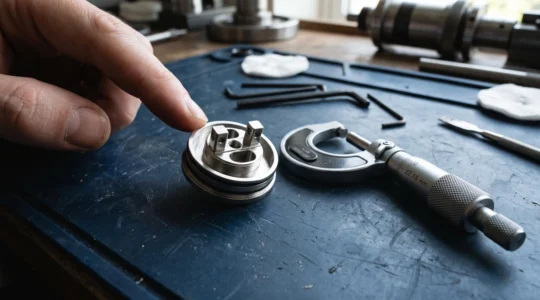
Why Does Machining Precision Matter in a Rebuildable Vape Atomiser?
Machining precision determines how reliably a rebuildable vape atomiser’s individual components fit, seal and maintain their intended alignment. Small dimensional differences around the build deck, airflow passages, threads and O-ring grooves can alter assembly feel, leakage resistance and the space…
Lire la suite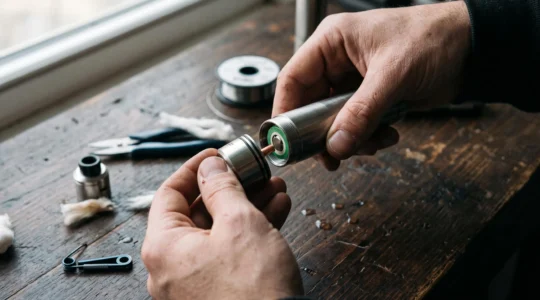
How Do Direct Electrical Connections Change the Behaviour of a Mechanical Vape?
A direct electrical connection changes a mechanical vape because the battery supplies the atomiser without an electronic circuit actively controlling output. Coil power therefore depends on the cell’s available voltage, the electrical resistance of the circuit and losses through its…
Lire la suite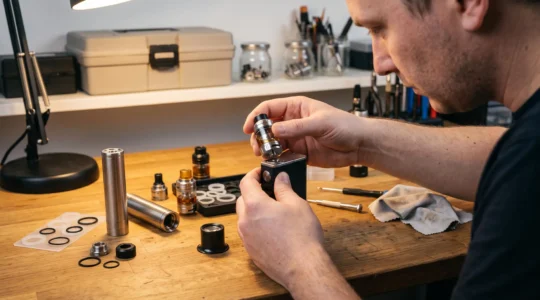
Which Mechanical Limits Matter Most in High-Output Vape Hardware?
High-output vape hardware is constrained by more than the wattage displayed on a screen or the current rating of a battery. Threads must distribute mechanical loads, connectors must maintain electrical contact, seals must remain properly compressed, and insulating components must…
Lire la suite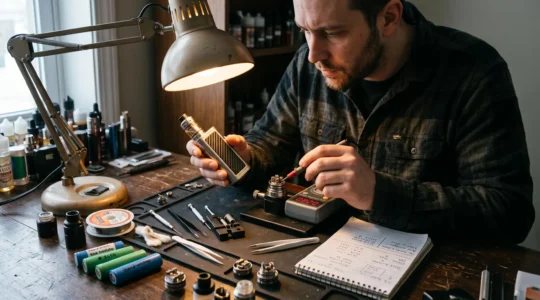
What Should You Consider Before Using Modified Vaping Hardware?
Modified vaping hardware can behave differently from the original device even when the alteration appears minor. Replacing a connector, changing an atomizer, adjusting battery contacts or modifying airflow can affect electrical resistance, heat transfer, mechanical alignment and the protections available…
Lire la suite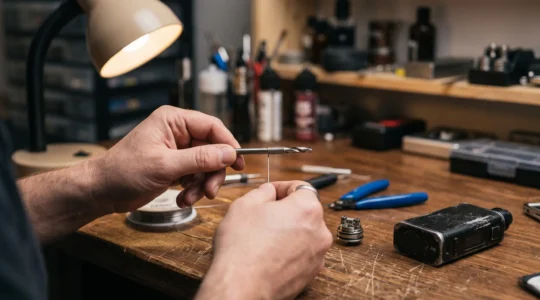
Which Coil-Building Techniques Improve Consistency on a Rebuildable Atomiser?
Consistent rebuildable coils start with controlled geometry rather than repeated wattage adjustments. Using the same wire specification, mandrel diameter, wrap count and installation position makes each build easier to reproduce. Secure electrical connections and stable resistance measurements then help identify…
Lire la suite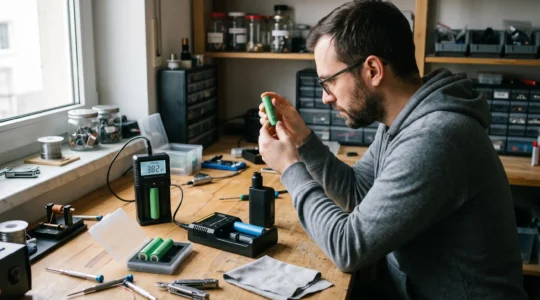
Which Lithium-Ion Battery Characteristics Matter Most in a Vape Device?
A lithium-ion battery influences far more than how long a vape lasts between charges. Its capacity determines how much energy it can store, its continuous discharge rating limits the current it can safely supply, and its internal resistance affects voltage…
Lire la suite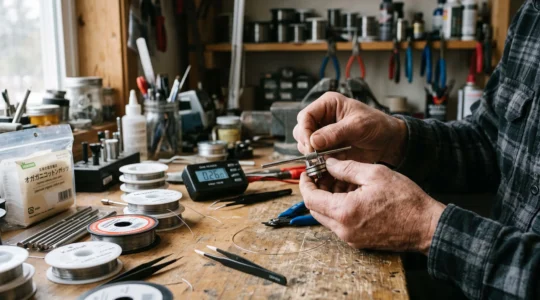
How Should You Choose Custom Heating Wire for a Rebuildable Vape Coil?
Choosing custom heating wire for a rebuildable vape coil starts with three connected decisions: material, wire dimensions and coil construction. Together, these determine electrical resistance, heating response and whether the finished coil fits the atomiser deck and the operating mode…
Lire la suite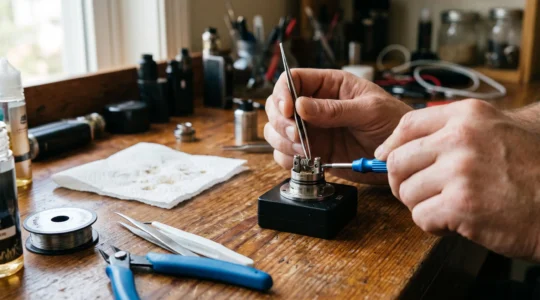
How Do Atomiser Build Posts Affect Coil Installation and Deck Layout?
Atomiser build posts determine where coil leads can be secured, how the coil approaches the airflow and which installation techniques are practical. Their arrangement influences the usable coil diameter, lead orientation, mounting height and the space available for single- or…
Lire la suite
How Does a Wider Vape Chimney Change Vapour Flow Through a Tank?
A wider vape chimney provides a larger passage for aerosol to travel from the coil chamber to the mouthpiece. When that passage is a significant restriction in the tank, increasing its internal diameter can reduce pressure losses, accommodate greater airflow…
Lire la suite