Electronic Cigarettes
Electronic cigarettes, also known as e-cigarettes or vapes, have become one of the most discussed alternatives to traditional smoking. Yet for many people, they remain surrounded by confusion: how do they actually work, are they really less harmful than cigarettes, and which device should a beginner choose? This pillar page is designed to answer those questions in a clear, structured and honest way, so you can approach the topic with confidence rather than guesswork.
What Exactly Is an Electronic Cigarette?
An electronic cigarette is a battery-powered device that heats a liquid — called e-liquid or vape juice — to create an aerosol that the user inhales. Unlike a traditional cigarette, there is no combustion: nothing is burned, no tar is produced, and no smoke exists. What you see is vapor, which is why the practice is commonly called « vaping. »
A useful analogy: think of a traditional cigarette as a campfire and an e-cigarette as a kettle. The campfire burns material and releases smoke full of combustion by-products. The kettle simply heats a liquid until it turns to steam. That fundamental difference — heating instead of burning — is the core of everything that follows.
How Does an Electronic Cigarette Work?
Every e-cigarette, from the smallest disposable to the most advanced mod, relies on the same three essential components working together:
- The battery provides the energy needed to heat the coil. Its capacity, measured in mAh, determines how long you can vape before recharging.
- The atomizer contains the coil (a small metal resistance wire) and the wick, usually made of cotton, which soaks up the e-liquid.
- The tank or cartridge holds the e-liquid and feeds it to the wick.
When you press a button (or simply inhale, depending on the model), the battery sends current to the coil, the coil heats up to a controlled temperature, and the soaked wick vaporizes the liquid into an inhalable aerosol. That is the entire process — elegantly simple in theory, but with many variables that affect flavor, vapor production and satisfaction in practice.
The Main Types of Electronic Cigarettes
Choosing a device is often the biggest source of confusion for newcomers. Devices generally fall into four families, each suited to a different profile of user.
Disposable E-Cigarettes
These are pre-filled, pre-charged devices designed to be thrown away once the liquid or battery is depleted. They are the simplest entry point: no buttons, no refilling, no maintenance. However, they are the most expensive option per puff over time, generate significant waste, and their sweet flavors often contain very high nicotine salt concentrations, which can surprise beginners.
Pod Systems
Pod systems use a small removable cartridge (the « pod ») that clicks onto a compact battery. They can be pre-filled or refillable. This is currently the most recommended category for beginners: the devices are small, discreet, easy to use, and offer a good balance between cost, performance and simplicity. Think of them as the smartphone of vaping — compact, practical, and powerful enough for most people.
Vape Pens
Slightly larger and shaped like a pen, these devices typically combine a refillable tank with a single battery stick. They offer more vapor and battery life than pods while remaining easy to handle, making them a natural second step for users who want a bit more control.
Box Mods and Advanced Kits
These are the « enthusiast » devices: larger batteries, adjustable wattage, temperature control and interchangeable tanks. They deliver maximum flavor and vapor customization, but they require understanding concepts like Ohm’s law, coil resistance and battery safety. They are not the place to start — they are a destination.
Understanding E-Liquids: The Fuel of the Device
The e-liquid is what turns into the vapor you inhale, so knowing its composition is essential. Virtually all e-liquids are built from the same four ingredients:
- Propylene glycol (PG): a thin, colorless liquid that carries flavor and produces a sensation similar to the « throat hit » of a cigarette. It is widely used in food and medical inhalers.
- Vegetable glycerin (VG): a thicker, slightly sweet liquid responsible for dense vapor clouds. A 50/50 PG/VG blend suits most pod systems, while 70/30 VG-heavy liquids suit sub-ohm devices.
- Food-grade flavorings: the same type of concentrates used in the food industry, from classic tobacco to fruit, mint and dessert profiles.
- Nicotine (optional): available in various strengths, from 0 mg up to 20 mg/ml in nicotine salt formulations under most current regulations.
A key point for beginners: nicotine strength should match your habits. A former heavy smoker will typically feel satisfied with 10–20 mg/ml of nicotine salt, while a light smoker may only need 3–6 mg/ml of freebase nicotine. Choosing too low a strength is one of the most common reasons people fail to switch and return to cigarettes.
Electronic Cigarettes vs. Traditional Cigarettes: What the Science Says
This is the question everyone asks, and it deserves a nuanced, honest answer. A lit cigarette produces thousands of chemicals through combustion, of which at least 70 are known carcinogens — tar, carbon monoxide, formaldehyde and many others. Because vaping eliminates combustion entirely, the aerosol from an e-cigarette contains a drastically reduced number and quantity of toxic substances.
Public health bodies such as the UK’s NHS and Public Health England have stated that vaping is significantly less harmful than smoking, with commonly cited estimates placing it at around 95% less harmful. However, « less harmful » does not mean « harmless »: the long-term effects of inhaling vaporized flavorings are still being studied, and e-cigarettes are not recommended for non-smokers, minors or pregnant women.
The clearest way to frame the comparison: for a smoker, switching completely to vaping removes the most dangerous part of the habit — combustion. For a non-smoker, starting to vape introduces risks they would not otherwise have. Context changes everything.
Can E-Cigarettes Help You Quit Smoking?
Many smokers turn to electronic cigarettes as a cessation tool, and the evidence is increasingly supportive of this use. A major randomized clinical trial published in the New England Journal of Medicine found e-cigarettes to be roughly twice as effective as traditional nicotine replacement therapy (patches and gum) for smoking cessation. Real-world observation tells a similar story in countries like the United Kingdom, where vaping is actively promoted by health services as a quit-smoking aid.
That said, success depends heavily on how you approach it. Common pitfalls include:
- Choosing a device that is too weak or too complicated, leading to frustration.
- Picking a nicotine strength too low, causing persistent cravings and « dual use » (vaping and smoking at the same time).
- Expecting vaping to feel exactly like smoking — it is a distinct experience that takes one to two weeks to adapt to.
The most effective pattern observed among successful switchers is simple: one suitable device, the right nicotine level, one or two flavors you genuinely enjoy, and complete replacement of cigarettes rather than partial use.
Getting Started: A Beginner’s Roadmap
If you are considering making the switch, following a structured approach dramatically improves your odds of a smooth transition:
- Assess your smoking profile: how many cigarettes per day, and what strength? This determines your starting nicotine level.
- Choose a pod system or vape pen rather than a disposable — better economics, better satisfaction, less waste.
- Select a nicotine strength that suppresses cravings without causing dizziness or headaches. Adjust up or down after a few days.
- Test two or three flavor profiles (tobacco, mint, fruit) to find what keeps you away from cigarettes.
- Set a switch date: from that day forward, use only your e-cigarette. Complete switching captures nearly all of the harm-reduction benefit.
- Reduce nicotine gradually over the following months if your goal is to become nicotine-free entirely.
Essential Safety and Maintenance Tips
E-cigarettes are simple devices, but a few basic practices ensure a safe and pleasant experience:
- Use only the charger supplied or recommended by the manufacturer, and never leave batteries charging unattended overnight.
- Keep e-liquids away from children and pets — nicotine liquid is toxic if ingested.
- Replace coils regularly (typically every one to three weeks depending on usage) to avoid a burnt taste and degraded flavor.
- Store devices and liquids away from direct sunlight and extreme heat.
- Buy products from reputable vendors; counterfeit or poorly manufactured devices and liquids are the main source of reported incidents.
Frequently Asked Questions About Electronic Cigarettes
Does vaping produce second-hand smoke?
No. Because there is no combustion, there is no smoke. The exhaled aerosol dissipates within seconds and contains far fewer substances than cigarette smoke, though common courtesy still suggests avoiding vaping in enclosed shared spaces.
Will my e-cigarette explode?
Incidents are extremely rare and almost always linked to damaged batteries, unauthorized chargers or counterfeit products. Following basic battery safety guidelines makes the risk negligible.
How much does vaping cost compared to smoking?
While the initial device purchase costs more than a pack of cigarettes, ongoing costs — e-liquid and coils — are typically a fraction of the price of smoking. Most switchers report savings of 50 to 80% compared to their previous cigarette spending.
Can I vape with zero nicotine?
Yes. Many people gradually step down to 0 mg/ml liquids and continue vaping purely for the ritual and flavor, or eventually stop altogether. The choice is entirely yours.
Key Takeaways
Electronic cigarettes are best understood as a harm-reduction tool: a device that replicates the hand-to-mouth ritual and nicotine delivery of smoking while eliminating the deadly process of combustion. For smokers unable or unwilling to quit with other methods, switching completely to vaping represents a meaningful reduction in health risk. For non-smokers, they offer no benefit and carry unnecessary risk. Understanding how the devices work, choosing the right category and nicotine strength, and buying quality products are the three pillars of a safe and successful experience — and the foundation this category is built to provide.
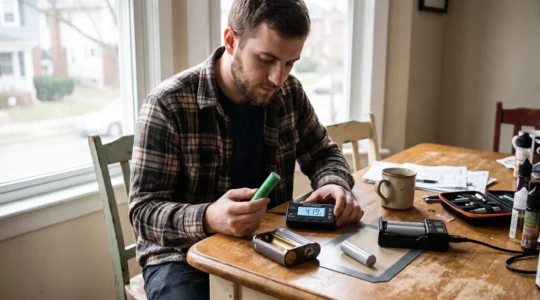
How Does Battery Capacity Translate Into Real Vape Runtime?
A vape battery rated at 3,000 mAh does not provide a fixed number of puffs or guarantee a full day between charges. Its capacity describes how much electrical charge it can deliver under specified conditions. Actual runtime depends on how…
Lire la suite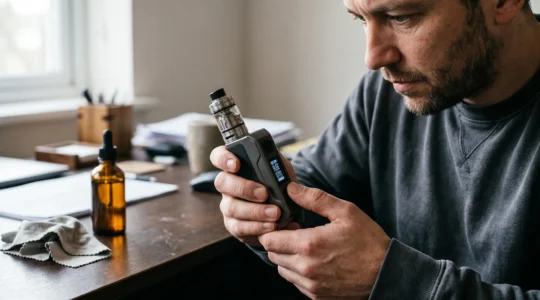
How Does Coil Resistance Influence Vape Performance on a Regulated Device?
Coil resistance determines the electrical conditions under which a regulated vape delivers power, but it does not independently determine how much vapor the device produces. Unlike a mechanical mod, a regulated device measures the atomizer’s resistance and adjusts its electrical…
Lire la suite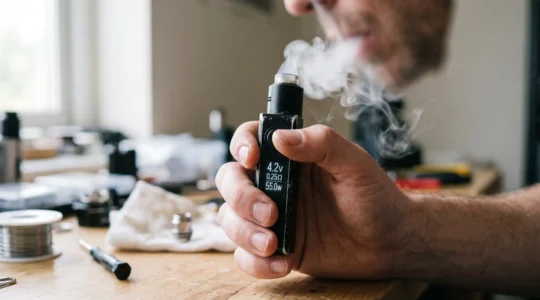
How Can Real-Time Vape Device Telemetry Help Diagnose Hardware Behaviour?
Real-time vape telemetry offers a window into how a regulated device responds to electrical conditions. Voltage, coil resistance, battery information and, on compatible devices, estimated temperature can help explain why delivered power changes during operation. These readings are particularly useful…
Lire la suite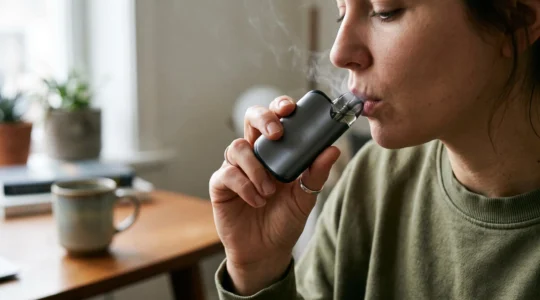
How Does a Draw-Activated Mechanism Detect a Puff and Start Heating?
A draw-activated vape starts heating when a sensor detects the airflow or pressure change caused by inhalation. Instead of pressing a firing button, the user draws through the mouthpiece. The sensor produces an electrical signal, the control circuit evaluates it,…
Lire la suite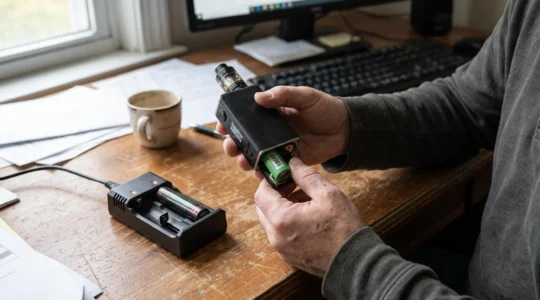
How Can Battery Efficiency Extend Runtime in a Regulated Vape Device?
Battery efficiency can extend the practical runtime of a regulated vape device by reducing the energy lost between the battery and the heating coil. A battery’s milliamp-hour rating matters, but it cannot independently predict how many puffs a device will…
Lire la suite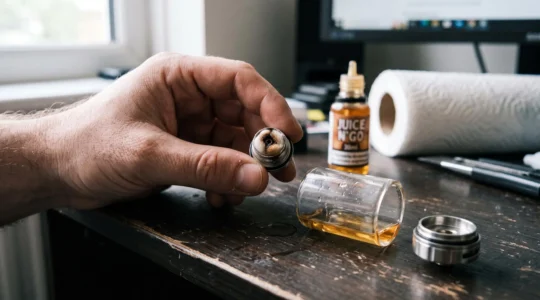
Why Do Dry Hits Happen Even When a Vape Tank Still Contains E-Liquid?
A vape tank can still contain plenty of e-liquid while its coil produces a harsh, burnt-tasting puff. The reason is that liquid inside the tank is not necessarily reaching the heated wick fast enough. A dry hit occurs when the…
Lire la suite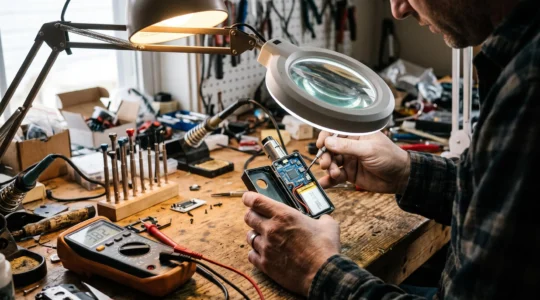
How Do Integrated Control Microchips Manage a Regulated Vape Device?
A regulated vape device does not simply connect its battery to a heating coil when the user presses a button. An integrated control microchip processes electrical measurements, interprets the selected operating mode and coordinates the power circuitry responsible for heating…
Lire la suite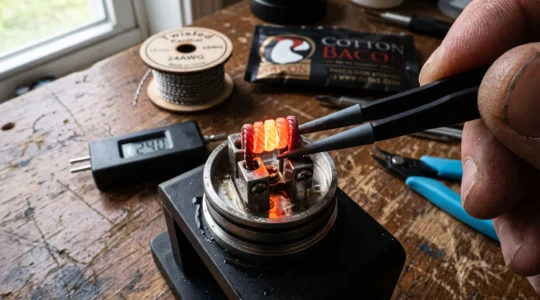
How Does a Metallic Heating Coil Turn Electrical Power Into Vapour?
A metallic vape coil converts electrical energy into thermal energy through electrical resistance. When current passes through the heating wire, electrical power is dissipated as heat. That heat transfers to the surrounding e-liquid, allowing volatile components to evaporate and subsequently…
Lire la suite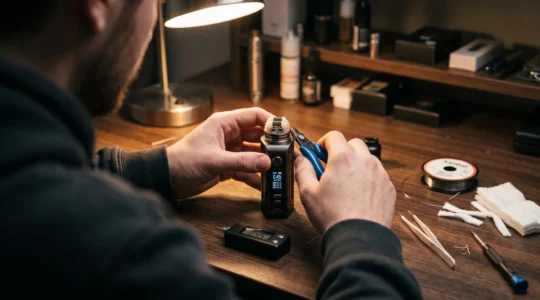
How Does Electrical Resistance Affect Power and Heating in a Vape Coil?
Electrical resistance determines how a vape coil responds to the voltage applied across it. Measured in ohms (Ω), resistance controls the relationship between voltage, current and electrical power. Those relationships explain why some coils require higher currents, why others need…
Lire la suite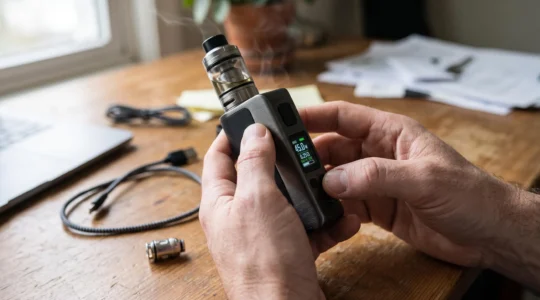
How Does Power Delivery Shape Coil Heating in a Regulated Vape?
Setting a regulated vape to a particular wattage does not mean the battery sends that exact amount of electrical power directly to the coil. Between the battery and atomiser sits electronic circuitry that manages voltage, monitors electrical conditions and determines…
Lire la suite