Blog
Welcome to our smoking blog, a space designed to help you understand every facet of tobacco use — from how cigarettes affect your body to the practical steps you can take to quit. Whether you are a curious beginner, a concerned friend or family member, or a smoker thinking about change, this pillar page brings together the essential knowledge in one place. Our goal is simple: to replace confusion and myth with clear, reliable, and actionable information.
What Is Smoking and Why Does It Matter?
Smoking is the act of burning tobacco and inhaling the resulting smoke, most commonly through cigarettes. Think of a cigarette as a small chemical factory: when lit, it releases more than 7,000 compounds, of which hundreds are toxic and around 70 are known to cause cancer. Nicotine is the substance that creates dependence, while tar and carbon monoxide are among the main agents of physical damage.
Understanding this matters because smoking remains one of the leading preventable causes of death worldwide. Yet most smokers underestimate how quickly harm accumulates — damage often begins within the first years of regular use, long before any symptoms appear.
How Smoking Affects Your Body
The effects of smoking are systemic, meaning they touch nearly every organ. A useful analogy: imagine your body as a house, and smoke as a slow, continuous fire spreading through every room.
- Lungs: chronic inflammation, reduced breathing capacity, chronic bronchitis, emphysema, and a dramatically increased risk of lung cancer.
- Heart and circulation: higher blood pressure, damaged arteries, and a sharply elevated risk of heart attack and stroke.
- Skin and appearance: premature aging, dull complexion, and slower wound healing due to reduced oxygen supply.
- Senses: gradual dulling of taste and smell, often unnoticed until quitting restores them.
- Fertility and pregnancy: reduced fertility in both men and women, and serious risks during pregnancy.
The encouraging news: the body begins repairing itself within hours of the last cigarette. After just 48 hours, nicotine is largely cleared from the blood; after one year, the excess risk of heart disease drops by about half. Recovery is real, and it starts early.
Understanding Nicotine Addiction
Many people believe smoking is merely a habit or a matter of weak willpower. In reality, nicotine dependence is a genuine physiological phenomenon. Nicotine reaches the brain in about ten seconds, triggering a release of dopamine — the same reward chemical involved in pleasure and motivation. Over time, the brain adapts, and smoking becomes less about pleasure and more about avoiding withdrawal.
A concrete example: a smoker who lights up first thing in the morning is usually showing a high level of dependence, because overnight abstinence creates a strong craving. Recognizing this mechanism is not an excuse — it is the first step toward choosing the right tools to quit.
Common Myths About Smoking, Debunked
Misinformation keeps many smokers from acting. Here are the most persistent myths, corrected:
- « Light » or « organic » cigarettes are safer. False. All tobacco products deliver harmful toxins; the difference in risk is negligible.
- Quitting means gaining a lot of weight. Weight gain is possible but modest on average (a few kilograms), and it can be managed with planning and physical activity.
- It’s too late; the damage is done. False. Quitting brings measurable health benefits at any age, even for long-term heavy smokers.
- Occasional smoking is harmless. False. Even light smoking significantly raises cardiovascular risk.
Quitting Smoking: Proven Methods That Work
There is no single universal method — success comes from combining strategies that fit your situation. The most effective approaches include:
- Nicotine replacement therapy (NRT): patches, gum, and lozenges that reduce cravings while you break the behavioral habit. They roughly double your chances of success compared to going cold turkey.
- Medical support: prescription treatments and consultations with a doctor or tobacco specialist, especially useful for heavy or long-term smokers.
- Behavioral support: counseling, quitlines, and support groups that address the psychological side of addiction.
- Preparation: choosing a quit date, identifying your triggers (coffee, stress, social situations), and planning substitute activities in advance.
A practical example: instead of your morning cigarette with coffee, replace the ritual with a short walk or a glass of water at a different spot in your home. Changing the context is often as important as fighting the craving itself.
Dealing With Cravings and Relapses
A craving typically peaks within three to five minutes and then fades — like a wave you can ride out rather than a wall you must break. Useful techniques include:
- Deep breathing or a brief physical distraction (stairs, a quick walk).
- Drinking water slowly or chewing sugar-free gum.
- Calling a support person or using a quit-smoking app to track progress.
Relapse is not failure. Most successful quitters needed several attempts. Each attempt teaches you something about your triggers and your most vulnerable moments. Treat a slip as data, not as a verdict.
Secondhand Smoke: Protecting the People Around You
Secondhand smoke exposes non-smokers to the same toxins, without any filter. Children, pregnant women, and people with respiratory conditions are particularly vulnerable. Smoking outdoors, away from windows and shared spaces, is a simple step that meaningfully protects your loved ones — and it often reinforces your own motivation to quit.
Key Takeaways and Your Next Steps
Smoking is a powerful addiction, but it is also one of the most reversible health risks. Remember these fundamentals:
- Damage is real but largely reversible once you quit.
- Nicotine dependence is physiological — use tools, not just willpower.
- Combination approaches (replacement therapy + support) work best.
- Every attempt counts, even imperfect ones.
Browse the articles in this category to go deeper into each topic, and take the first step today: the best moment to quit was years ago — the second-best moment is now.
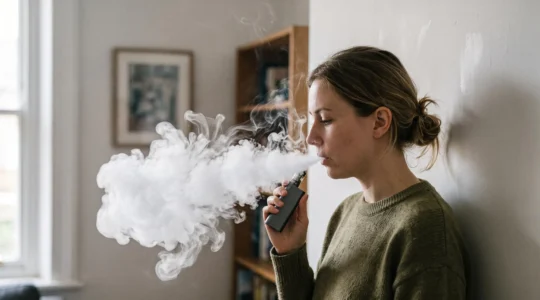
What Makes Vape Aerosol Clouds Dense, Thin or Quick to Disappear?
A thick white cloud leaving an e-cigarette can appear substantial, yet become almost invisible within seconds. Another exhale may look faint initially but remain noticeable as it drifts through a quiet room. These differences arise from several interacting physical processes,…
Lire la suite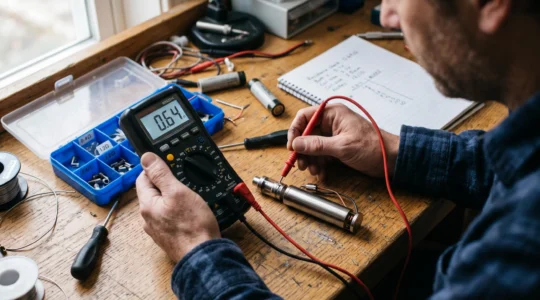
Which Basic Circuit Principles Help Explain How a Vape Device Works?
A vape device converts electrical energy stored in a battery into heat through a resistive coil. Understanding that process requires more than recognising the numbers on a screen: voltage determines the electrical potential applied to the coil, resistance influences current…
Lire la suite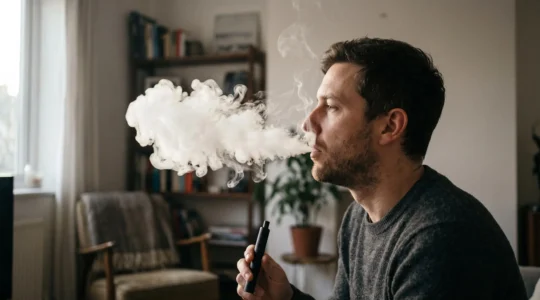
Why Do Vape Vapour Plumes Change Shape and Density After Exhalation?
A visible vape plume can emerge as a compact white cloud, stretch into a narrow stream, rise towards the ceiling or disappear almost immediately. These changes are not random. They result from the interaction between aerosol droplets, exhaled air and…
Lire la suite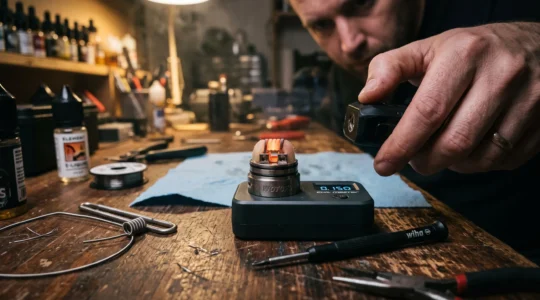
How Does Heat Distribution Affect Vapour Quality Across Consecutive Puffs?
Vapour can feel smooth and flavourful on the first puff, noticeably warmer on the second, and harsh by the fourth—even when the atomiser’s power setting never changes. The difference often comes from how heat moves through the coil, wick and…
Lire la suite
How Do Airflow Dynamics Change Draw Resistance, Cooling and Vapour Production?
Airflow dynamics determine how much effort a vape requires to inhale, how effectively its heating element loses heat and how the resulting aerosol travels through the atomiser. Restricting an air inlet generally increases draw resistance and reduces cooling airflow. Opening…
Lire la suite