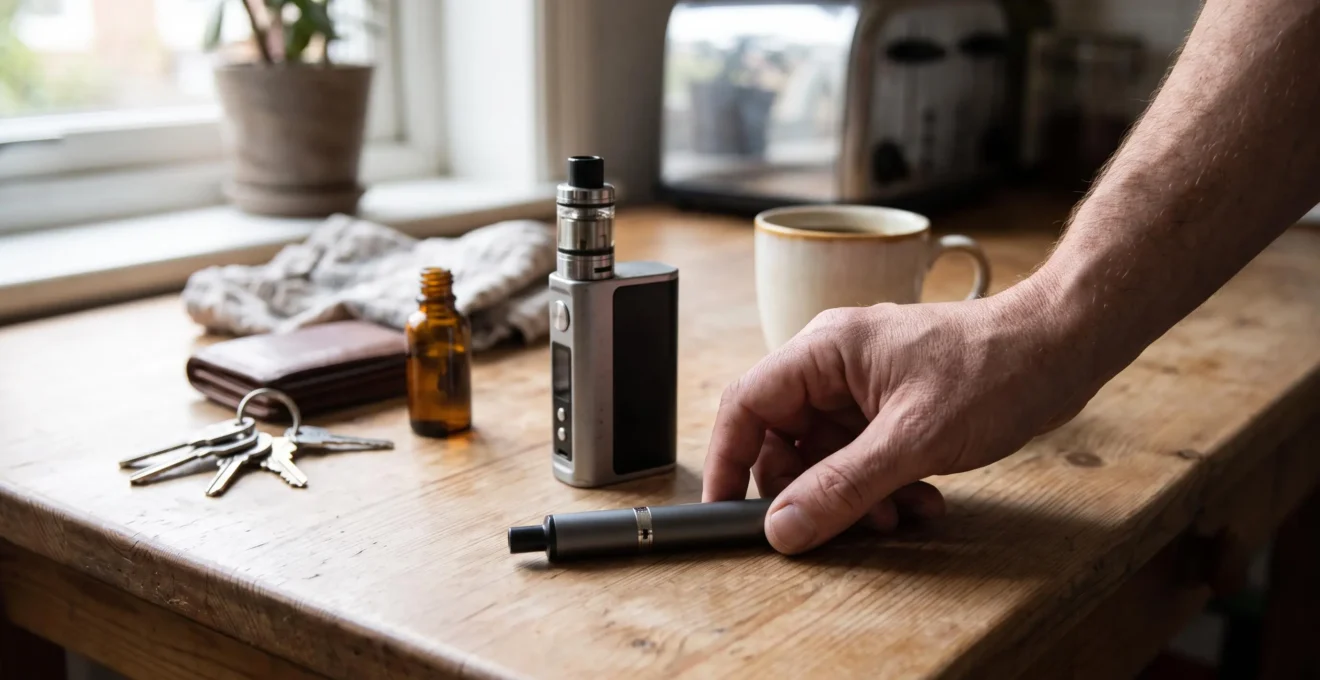
A cylindrical vape pen can be a more practical everyday device than a larger box-shaped model when portability, straightforward operation and minimal adjustments matter more than maximum battery capacity or extensive power controls. Its narrow body is easier to accommodate in a small pocket or bag, although that compactness can limit the space available for internal components.
The difference becomes noticeable during ordinary activities: commuting, working away from home, carrying spare pods or deciding whether a device needs charging before leaving. A slim pen may fit these routines comfortably, while a larger device can offer longer operation, a broader range of adjustments and a different grip.
Neither shape is universally preferable. Modern pen-shaped devices can use refillable tanks, sealed pods or replaceable coils, and their capabilities vary considerably. Understanding the hardware, maintenance requirements and constraints of each format helps adults already vaping, or adult smokers considering vaping to stop smoking, select equipment appropriate to their circumstances. Vaping is not risk-free and is not recommended for non-smokers.
Cylindrical vape pens: the essential trade-offs
- A slim vape pen generally suits people who prioritise pocketability, familiar handling and fewer settings over extensive power adjustment.
- Its compact construction can involve shorter battery runtime, smaller liquid capacity and more frequent attention to charging or refilling.
- A larger device becomes worth considering when specific frustrations arise, such as insufficient battery endurance, restricted airflow or uncomfortable handling.
- Why Are Vape Pens Usually Simpler Than Larger Box-Shaped Devices?
- How Can You Clean a Cylindrical Vape Pen Without Flooding Its Connections?
- Vape Pen or Pod System: Which Is Easier for a Compact Daily Setup?
- Which Limitations Become Noticeable on Compact Cylindrical Vape Pens?
- When Should You Move Beyond a Basic Vape Pen to More Adjustable Hardware?
- Why Can a Box-Shaped Vape Feel More Stable in the Hand Than a Slim Pen?
- Sealed or Refillable Pod: Which Better Fits a Low-Maintenance Routine?
- How Can You Build a Vaping Setup That Matches Your Power and Portability Needs?
Why Are Vape Pens Usually Simpler Than Larger Box-Shaped Devices?
Vape pens are often simpler because their cylindrical bodies offer relatively little room for batteries, control electronics and adjustment mechanisms. Manufacturers frequently respond with integrated batteries, automatic activation or a small number of operating modes. Larger box-shaped devices have more space for displays and controls, although the shape alone does not determine how complicated a device must be.
A slim tube must accommodate its main components within a narrow cross-section. Fitting a battery, circuit board, electrical connections and airflow pathway into that space can encourage a streamlined design. A box-shaped enclosure offers more flexibility when arranging these components and adding physical controls.
However, two different forms of simplicity matter in everyday use:
- Operational simplicity: fewer settings to understand, potentially with draw activation or one-button operation.
- Mechanical simplicity: fewer detachable components, reducing the number of parts users must assemble, inspect or replace.
A pen with a refillable tank and replaceable coil may be operationally straightforward but require several maintenance steps. Conversely, a device with a removable pod may have very few components to handle while still offering adjustable airflow or power.
The distinction matters when comparing products. Someone who dislikes navigating settings may prefer fixed-output hardware but still be comfortable replacing coils. Someone who wants minimal contact with e-liquid might prefer a sealed-pod system, regardless of whether its body is cylindrical.
The NHS guidance on vaping to quit smoking distinguishes simpler device categories from variable-power mods, which generally require more operating knowledge and maintenance. It also explains the importance of selecting an appropriate nicotine strength for adults switching from cigarettes.
A larger device is not automatically more effective at managing nicotine cravings. Nicotine delivery depends on several factors, including the liquid, coil, power setting and individual use. Physical size alone is not a reliable measure of suitability.
The trade-off is that simplified controls may leave less opportunity to alter airflow, power or other operating characteristics. These restrictions can be acceptable when the standard configuration already meets a user’s requirements.
Once the desired level of simplicity is clear, the next consideration is whether that hardware can be kept clean without introducing additional maintenance problems.
How Can You Clean a Cylindrical Vape Pen Without Flooding Its Connections?
Clean a cylindrical vape pen by switching it off where applicable, disconnecting the pod or tank, and removing visible residue with a dry cotton swab or lint-free paper towel. Keep the battery compartment and electrical contacts away from running water. Follow the manufacturer’s cleaning instructions and allow every cleaned connection to dry completely before reassembly.
The main concern is the interface between the battery body and the removable liquid-containing component. Depending on the design, this may consist of spring-loaded contacts, a recessed pod compartment or a threaded 510 connection.
Condensation, leaked e-liquid and pocket debris can accumulate around these areas. Because many slim devices place the reservoir directly above the electrical connection, liquid escaping from a pod or tank can reach the contacts. This is a possible failure pathway, not evidence that cylindrical devices leak more frequently than all box-shaped models.
A careful cleaning procedure follows five steps:
- Disconnect the device. Switch it off if the model provides that option, unplug any charging cable and remove the pod or tank.
- Inspect the connection. Look for visible e-liquid, condensation, lint or damage around the contacts and seals.
- Remove loose residue. Use a dry cotton swab or folded lint-free paper towel without forcing material into the connector.
- Follow model-specific instructions. Where the manufacturer permits it, a small amount of isopropyl alcohol on a swab may be suitable for cleaning contacts. Do not pour liquid into the battery compartment.
- Dry and reassemble. Allow the cleaned area to dry completely, then reconnect the pod or tank and check the device’s operation.
Innokin’s device troubleshooting FAQ describes cleaning 510 connections and pod contacts with a cotton swab and a small amount of isopropyl alcohol, followed by air-drying. These instructions are manufacturer guidance and should not override different requirements for another model.
Cleaning should respond to actual operating conditions rather than an arbitrary calendar interval. Gurgling, unusual resistance when drawing, liquid around the pod base or intermittent electrical connection can justify an inspection. Muted flavour may instead indicate an ageing coil or exhausted pod, so wiping the contacts will not necessarily resolve it.
Avoid blowing forcefully through an assembled device to clear a blockage. Depending on its airflow design, this could move accumulated liquid toward parts that should remain dry. Disconnect the removable component first and follow its specific maintenance guidance.
Persistent leaking, damaged contacts or repeated connection errors deserve further attention rather than increasingly aggressive cleaning. A defective component may require replacement, and a damaged battery body should not remain in use.
Keeping a slim pen clean is manageable when its components are easy to remove, but the amount of handling required depends heavily on whether the device uses pods or a conventional tank.
Vape Pen or Pod System: Which Is Easier for a Compact Daily Setup?
A pod system is often convenient for a compact daily setup, but a vape pen and a pod device are not mutually exclusive categories. Many cylindrical pens already use pods. The more useful comparison is between a pen with removable pods, particularly sealed ones, and a refillable tank system that requires separate liquid and potentially coil maintenance.
The word « pen » describes the device’s physical form. « Pod system » describes how e-liquid is contained and connected to the battery. Both features can exist in one product.
The UK government consultation annex on vape device types identifies refillable and replaceable pod systems, conventional tanks and hybrid devices such as pod mods. This classification explains why comparisons based only on product names can be misleading.
Three everyday considerations usually make the choice clearer: vaping frequency, tolerance for refilling and the relative importance of pocket size versus battery endurance.
| Everyday criterion | Pen with sealed or replaceable pod | Refillable tank setup |
|---|---|---|
| Frequency of use | Convenient for straightforward use when pod capacity and battery runtime are adequate. | May suit more frequent use when the selected tank and battery provide sufficient capacity. |
| Liquid handling | Sealed pods avoid manual refilling; refillable pods still require it. | Requires filling the tank and maintaining compatible components. |
| Portability versus runtime | Compact designs can be easier to carry but may require more frequent charging. | Larger configurations may accommodate greater capacity at the cost of bulk. |
| Ongoing maintenance | Sealed pods simplify replacement but create recurring purchases and discarded components. | Refillable tanks involve more handling, cleaning and potential coil replacement. |
For someone who uses a device occasionally while away from home, a small pod system may reduce the number of items carried. Someone with more frequent use may prefer a refillable configuration that accommodates their routine without repeated pod changes.
There is also a middle ground: certain device families offer both prefilled and refillable pod options. That flexibility can reduce the need to change the battery body if maintenance preferences evolve, provided the manufacturer’s compatibility information confirms the options.
Sealed pods transfer much of the filling process to the manufacturer but create dependence on compatible replacements. Refillable designs allow more liquid choice and may lower recurring liquid costs, although the actual savings depend on local prices and replacement-part consumption.
Once the preferred pod or tank arrangement is established, battery endurance, airflow and thermal behaviour become more important than the label attached to the product category.
Which Limitations Become Noticeable on Compact Cylindrical Vape Pens?
Compact cylindrical vape pens can become restrictive when their battery runtime, liquid capacity or fixed operating characteristics no longer match everyday use. Common limitations include limited airflow adjustment, few power settings and reduced room for heat dissipation. These constraints become noticeable at different usage levels, so repeated inconvenience matters more than any universal puff-count threshold.
A narrow enclosure places practical limits on the arrangement of internal components. However, individual design choices vary, and a well-engineered pen may perform better in a particular respect than a poorly matched larger device.
- Battery endurance: a compact battery may require charging during a long day, particularly with frequent use or higher power demand.
- Power adjustment: fixed-output models do not allow users to fine-tune wattage when the resulting vapour feels too strong or weak.
- Airflow: devices with fixed air inlets cannot always accommodate preferences for a tighter or looser draw.
- Liquid capacity: a small reservoir may need refilling or replacing during periods of frequent use.
- Heat management: limited enclosure space can complicate thermal design, although actual temperature behaviour depends on the device and operating conditions.
The same limitation can have very different consequences. Someone who uses a compact device intermittently and charges it at home may never find battery capacity restrictive. Someone using the same device frequently throughout a workday may encounter low battery warnings before returning home.
Rather than assuming a fixed number of puffs is normal, users can observe three indicators: how often the device needs charging, whether the preferred draw is achievable and whether the chosen e-liquid works as intended with the manufacturer’s specified coil and power range.
One inconvenience can reinforce another. Because compact devices may have both smaller batteries and smaller liquid reservoirs, recharging and refilling can become necessary within the same part of the day. That can be manageable at home but inconvenient during travel or work.
Device-specific technical information illustrates why specifications must be interpreted carefully. The Innokin EQ FLTR, for example, is documented with an integrated 400 mAh battery, draw activation and refillable pods. That figure describes one product, not a standard battery capacity for all cylindrical vape pens.
It is also essential to distinguish normal design compromises from potential faults. Limited runtime or a fixed airflow setting can be accepted characteristics. Persistent excessive heating, increasingly unreliable electrical connections, damaged battery components or repeated leaking are not simply the unavoidable price of compactness.
Excessive temperature can indicate malfunction. Stop using a device that becomes abnormally hot, and follow the manufacturer’s safety guidance rather than attempting to compensate through repeated activation or charging.
The practical question is not whether a pen has limitations, but whether those limitations repeatedly interrupt the way an adult user already relies on it.
When Should You Move Beyond a Basic Vape Pen to More Adjustable Hardware?
Moving beyond a basic vape pen makes sense when a specific, recurring limitation cannot be resolved within the manufacturer’s recommended settings or compatible components. Recharging repeatedly during the day, needing a different airflow range or wanting controlled power adjustment are practical triggers. Experience alone is not a reason to adopt more complicated hardware.
The decision is easier when it starts with an observable inconvenience rather than a vague desire for more features. A user who is comfortable with the current draw, flavour and battery routine gains little practical benefit from a screen full of additional settings.
Adjustable wattage changes the electrical power delivered to the coil within its permitted range. Depending on the equipment and liquid, this can affect heating, vapour output and perceived intensity. Adjustable airflow changes the resistance of the draw and can influence the operating experience.
Neither control guarantees a preferable result. Incorrect settings or incompatible components may produce poor performance or create avoidable safety problems. Manufacturers’ specifications should determine the permitted operating range.
Before replacing an entire device, identify the precise issue:
- Frequent charging suggests reviewing battery capacity and actual operating demand.
- A consistently restrictive draw suggests checking for adjustable airflow or a different compatible device design.
- Persistent dissatisfaction with fixed output may justify limited power adjustment, provided maintenance and compatibility requirements are understood.
- Difficulty maintaining or carrying the device may call for a different form factor rather than greater power.
More adjustable equipment also introduces less obvious obligations. A bulkier body takes more space, replaceable-battery systems require appropriate battery handling, and higher-power configurations may consume liquid more quickly. Additional controls also require the user to understand coil ratings and safe operating settings.
A mid-size pen or pod mod can be an intermediate option. Some models offer one adjustable parameter while keeping a comparatively compact body and a straightforward pod arrangement. This can address a specific frustration without adopting the size or complexity of a full box mod.
There is no need to change hardware merely because a product is described as advanced. The sensible comparison is between a known problem and the additional responsibility needed to solve it.
Even when adjustable features seem useful, the physical experience of holding and carrying the device should remain part of the decision.
Why Can a Box-Shaped Vape Feel More Stable in the Hand Than a Slim Pen?
A box-shaped vape can feel more stable because its wider surfaces allow more of the palm and fingers to support the device. A narrow cylinder provides a smaller contact area and may require a more concentrated finger grip. Actual comfort also depends on weight distribution, surface texture, hand size and the user’s familiarity with each shape.
Grip stability is not simply a question of overall weight. A broad housing can distribute contact pressure across a larger area, while a slim body may rest primarily between the thumb and a few fingers.
The wider design may also resist certain rotational movements in the hand because flatter surfaces offer more obvious resting positions. However, the perceived centre of gravity is determined by the arrangement and mass of the internal components, not automatically by whether a device is box-shaped.
For someone who holds a vaping device repeatedly during the day, grip position may influence comfort. A cylindrical pen can encourage a fingertip hold similar to that used for a writing instrument. A box-shaped model may be cradled in the palm instead.
Neither posture is inherently superior. Hand fatigue varies with duration, grip force, device weight and individual anatomy, and the supplied evidence does not establish a measured ergonomic advantage for either shape.
The trade-off becomes apparent when the device is not in use. A wider body that feels secure in the palm can occupy more pocket space, create a more noticeable outline in clothing and be less convenient to carry alongside a phone or keys.
Conversely, some users find a cylindrical pen more intuitive because its proportions resemble familiar handheld objects. In those cases, a narrow body may feel more controllable despite offering less palm contact.
A useful assessment is to handle each type in ordinary positions: picking it up, holding it comfortably without excessive pressure and placing it in the pocket or bag normally used. This is a practical preference test, not a substitute for product-specific safety or performance information.
Comfort can influence everyday usability, but maintenance habits introduce another difference: the amount of work required to keep the liquid-delivery system functioning.
Sealed or Refillable Pod: Which Better Fits a Low-Maintenance Routine?
A sealed pod generally suits users who define low maintenance as minimal liquid handling and quick replacement. A refillable pod may be preferable when low ongoing cost and greater liquid choice matter more than avoiding refills. Neither option is maintenance-free: sealed systems depend on replacement availability, while refillable systems require careful filling and periodic inspection.
Before comparing products, define what « low maintenance » actually means. It can refer to three different priorities:
- Least hands-on time: avoiding refill procedures and reducing the number of components handled.
- Least opportunity for error: minimising spills, overfilling and incorrect e-liquid selection.
- Lowest recurring expenditure: reducing the long-term cost of liquid and consumable parts.
Sealed pods tend to perform well against the first two priorities because their liquid reservoirs arrive prefilled. When exhausted, the complete pod is replaced according to the device instructions. This avoids user refilling, though condensation, dirty contacts and defective pods can still require attention.
The disadvantage is dependence on compatible replacement pods. If the correct products become unavailable, the device may be unusable even when its battery is functioning normally. Replacing entire pods also generates discarded components.
Refillable pods shift responsibility to the user. Filling requires the correct liquid, attention to the fill opening and adherence to the manufacturer’s fill level and coil recommendations. Careless refilling can create leaks or contamination around electrical contacts.
Location and routine can help settle the decision. Someone who spends much of the day travelling may appreciate replacing a sealed pod without opening a bottle. Someone who primarily uses a device at home may find a controlled refill routine manageable and value the broader selection of compatible liquids.
Flavour changes are another consideration. Residual liquid in a refillable pod or coil can affect the taste of a different liquid. Replacing the coil or pod may reduce flavour carryover, while cleaning is appropriate only where the manufacturer explicitly permits it.
The Innokin EQ FLTR technical support documentation advises replacing the coil or pod when changing flavours and provides cleaning instructions for its pod compartment. Those instructions apply to the specified device; not every refillable pod is designed to be washed or dismantled.
For users who prioritise predictable handling over maximum flexibility, the best system is the one whose refill or replacement requirements fit the circumstances in which it is used.
With the preferred liquid system established, the final decision becomes a balance of power needs, carrying requirements, comfort and the likelihood that those needs will change.
Key takeaways before choosing a setup
- Repeated inconvenience is a stronger reason to change device category than occasional dissatisfaction or curiosity about additional controls.
- Carry comfort and grip comfort are separate factors; the best compromise depends on where the device spends most of the day.
- Pod and coil compatibility can matter as much as the battery body when maintenance preferences or equipment requirements change.
How Can You Build a Vaping Setup That Matches Your Power and Portability Needs?
Build an everyday vaping setup by assessing two main factors: how intensively the device is used and how often it must be carried away from charging and maintenance supplies. A cylindrical pen generally fits lighter or moderate usage with high portability needs. Mid-size devices offer compromises, while larger adjustable hardware can suit requirements for greater capacity or control.
Start with daily use rather than a product category. Consider whether the device typically lasts through the required period, whether refilling is conveniently possible and whether its existing airflow and output are satisfactory.
Next, assess mobility. A device used mainly at home does not need to meet the same pocket-size requirements as one carried during commuting or travelling. Conversely, portability may be valuable even when battery capacity is modest, provided charging opportunities are predictable.
| Usage and mobility profile | Device category to evaluate | Main compromise |
|---|---|---|
| Light or moderate use, frequent carrying | Compact cylindrical pen or small pod device | Limited battery and liquid capacity may require planning. |
| Moderate or frequent use, mixed home and travel | Mid-size pen or pod mod | Additional capacity or adjustment can increase size and complexity. |
| Frequent use, limited need for pocket portability | Larger refillable device or adjustable box mod | Greater bulk and potentially more maintenance. |
| Variable usage and changing preferences | Compatible device platform with appropriate adjustment options | Component compatibility must be checked before purchasing replacements. |
These are practical categories rather than guaranteed outcomes. Battery endurance depends on the particular battery, coil, settings and usage pattern. No device shape alone determines how long a charge will last.
Before changing hardware, review the following practical checks.
Five checks for a practical everyday setup
- Record when the current device needs charging during an ordinary day. Deliverable: a simple note identifying any repeated charging interruptions.
- Note where the device is normally carried and whether its dimensions cause inconvenience. Deliverable: a preferred size and carrying location.
- Identify the liquid system currently used and the handling it requires. Deliverable: a clear preference for sealed pods, refillable pods or a refillable tank.
- Check whether airflow, output and grip are satisfactory within the manufacturer’s recommended operation. Deliverable: one specific limitation to resolve, or confirmation that no change is needed.
- Verify replacement pod, coil and charging compatibility using the manufacturer’s documentation. Deliverable: a list of compatible components before selecting a different device.
The last check is particularly important when changing formats. A pod that fits one battery body cannot be assumed to work with another, even if the two devices look similar. Where a manufacturer offers a compatible family of products, remaining within that system may reduce unnecessary replacement of existing consumables.
Requirements can also evolve. A user who initially wants the fewest possible controls might later benefit from adjustable airflow or a larger battery. Equally, someone using an elaborate device may eventually prefer a smaller model if the extra functions remain unused.
Any change should respect battery and charging safety. Use the charging equipment and procedures specified for the device, avoid unattended charging, and discontinue use if signs of damage or abnormal heating appear. Vaping remains a health risk; for adults who smoke, its potential role in smoking cessation should not be confused with a recommendation for non-smokers to begin vaping.
Ultimately, a cylindrical vape pen is the better everyday choice when simplicity, pocketability and comfortable handling outweigh the need for extended runtime or extensive adjustment. A larger device is the more rational option when documented capacity, operating or ergonomic limitations repeatedly interfere with an established routine.
Use the five checks to identify the smallest appropriate device category, then compare actual manufacturer specifications and compatible components instead of relying on size or product labels alone.
Does a cylindrical vape pen always have a built-in battery?
No. Many compact pen-style devices have integrated rechargeable batteries, but cylindrical construction does not require this design. Some models use removable batteries or other configurations. Check the manufacturer’s specifications rather than assuming that body shape determines battery construction.
Can a compact vape pen deliver nicotine without adjustable wattage?
Yes. Fixed-output devices can deliver nicotine, and adjustable wattage is not essential for every adult smoker switching from cigarettes. Nicotine satisfaction depends on several factors, including liquid strength, device characteristics and individual use. Adults seeking to stop smoking should use appropriate cessation guidance rather than equating higher power with better results.
Should a vape pen be used while its battery is charging?
Only if the manufacturer explicitly supports pass-through operation and provides instructions for it. Otherwise, disconnect the charging cable before use. Follow the specified charging requirements, do not leave the device charging unattended or overnight, and stop using damaged charging equipment.
Can refillable pods be cleaned with running water?
Not universally. Cleaning methods depend on the pod’s construction and manufacturer instructions. Some components are not designed for rinsing, and electrical contacts or batteries should not be exposed to running water. Never assume a sealed coil assembly or integrated pod can be safely washed.
Does a larger vape device necessarily last longer between charges?
No. Larger devices may accommodate batteries with greater capacity, but operating power, coil resistance, usage intensity and efficiency also affect runtime. A higher-power device can consume energy more quickly. Compare actual battery specifications and the intended operating configuration rather than assuming larger dimensions guarantee longer endurance.